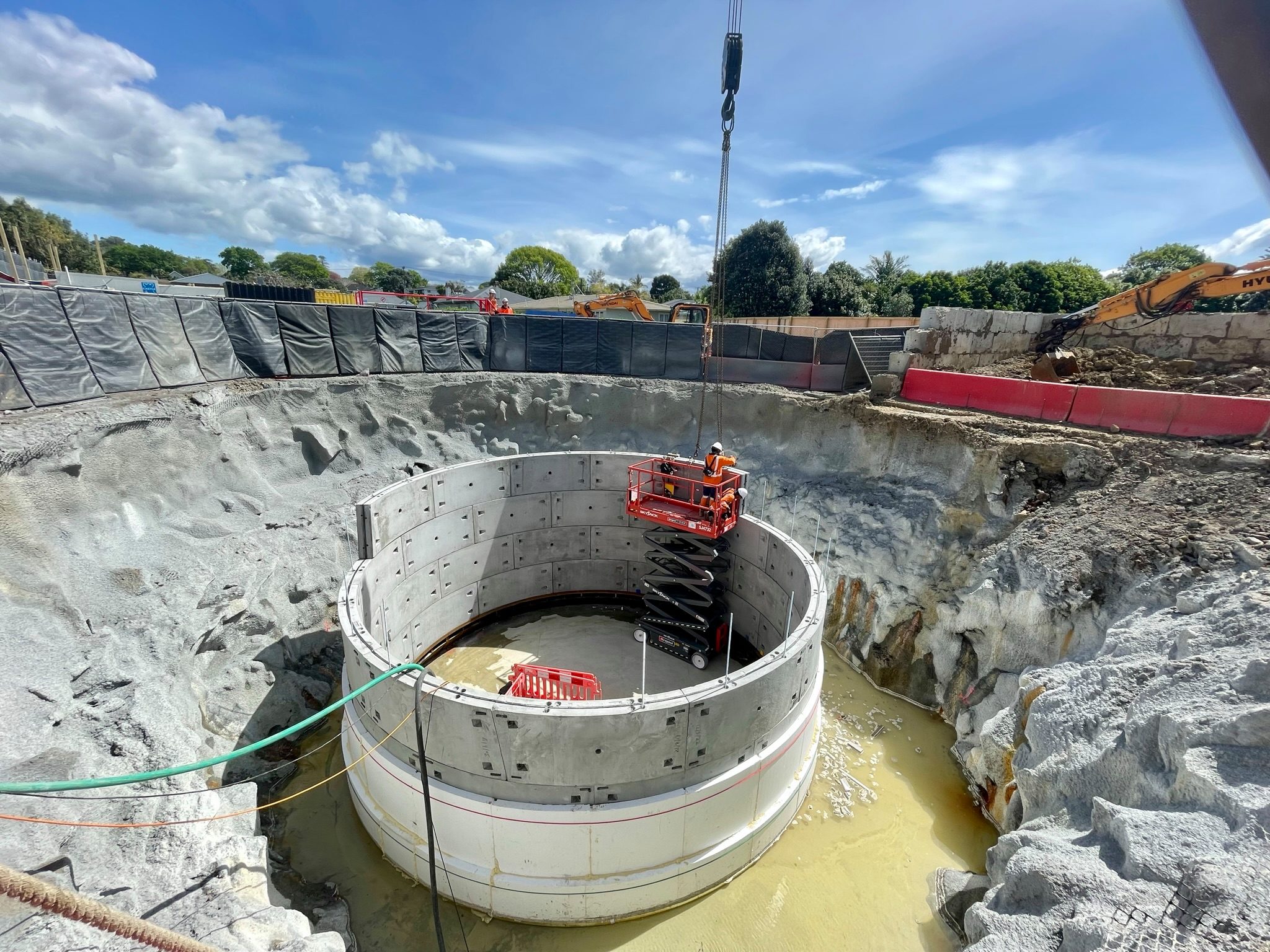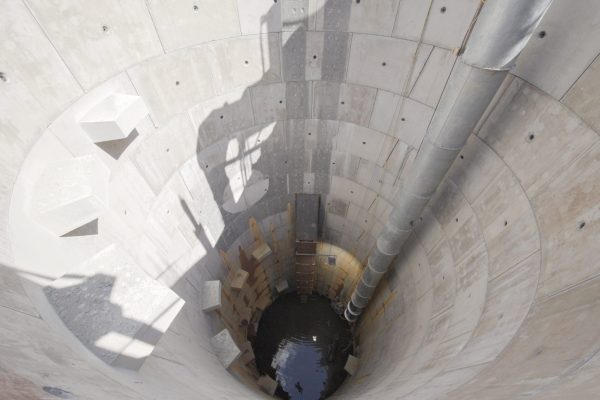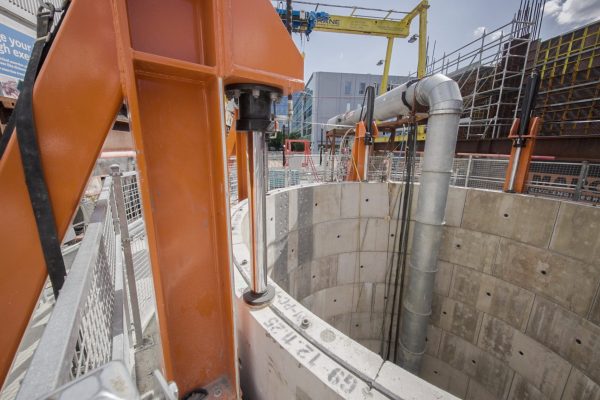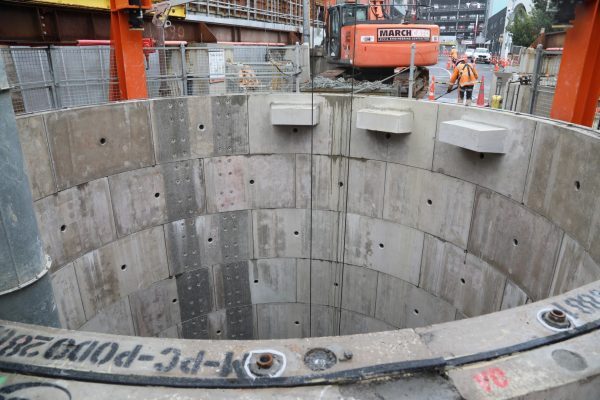

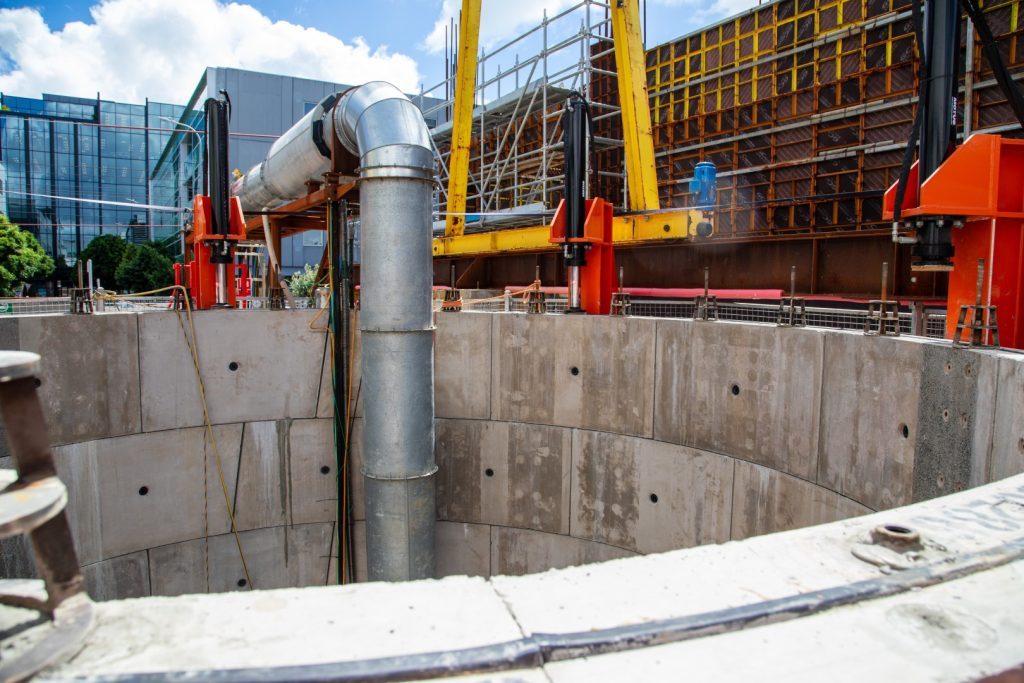

In Newmarket, ageing and constrained underground networks have struggled to cope with increasing demand, leading to flooding risk and wastewater overflows during heavy rainfall. As part of the Lower Khyber Pass Stormwater Separation Project, a 24 m deep precast concrete segmental shaft was constructed to support the separation of stormwater from the existing network.
For this project we drew on our caisson construction experience from the Central Interceptor, New Zealand’s largest wastewater infrastructure project to date. The segmental shaft design for Lower Khyber Pass Stormwater Separation Project was refined to greatly reduce number of configurations, improving manufacturing efficiency and constructability. Hynds worked with March Cato Ltd and Jacobs to deliver the shaft using a caisson sinking methodology, requiring careful coordination and execution on the constrained urban site in central Auckland.

Ray Dong, Lead Engineer – Structural & Civil, and Greg Head – Technical Services Manager on Khyber Pass Caisson Design
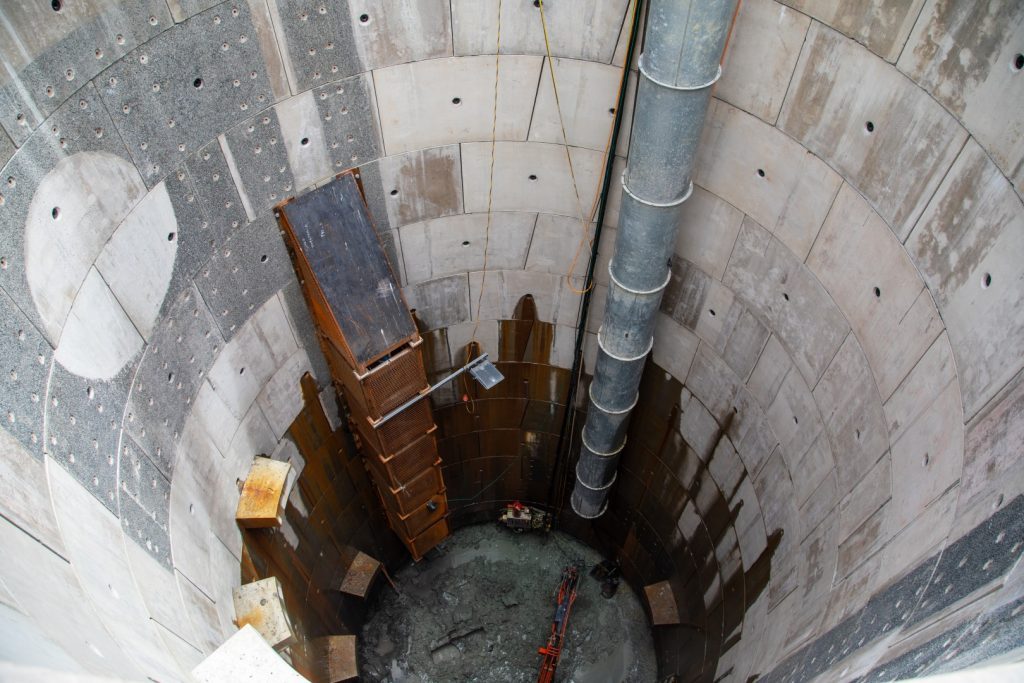
The primary shaft comprises:
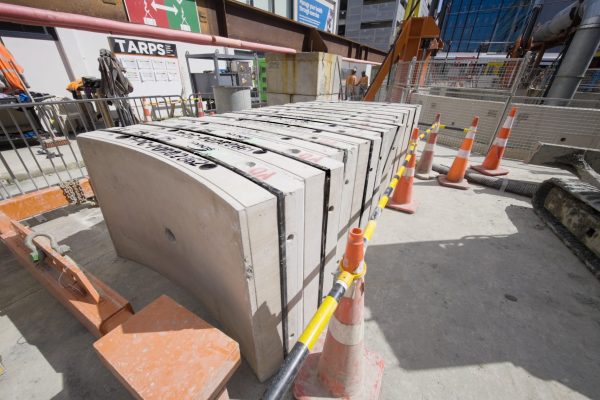
- 22 rings, each formed from 12 precast segments (264 segments total)
- A depth of 24 m to accommodate the invert of an existing 1800 mm stormwater outlet
The shaft also incorporates:
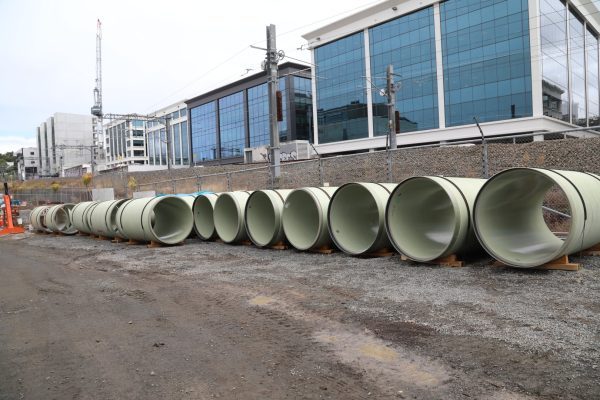
- A new 1500 mm GRP jacking pipe connection, introducing a 10 m drop
- Cascade panels to manage and dissipate flow energy
- Multiple service interfaces at shallow depth
- A central dividing wall enabling dry access for maintenance
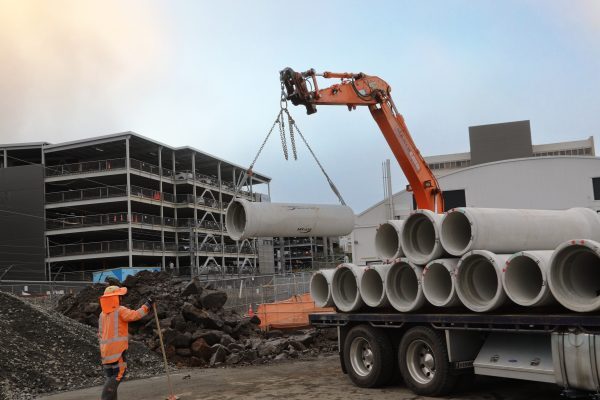
Segments were manufactured, labelled and delivered in sequence to support installation from ground level as the shaft was advanced. Installation progressed at an average rate of one ring per day, which required close coordination between manufacturing, logistics and site teams.
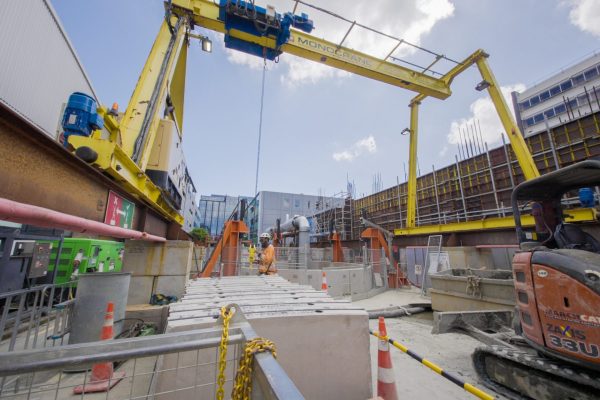
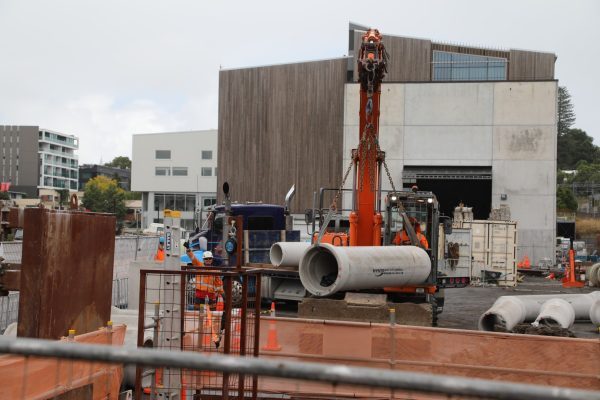
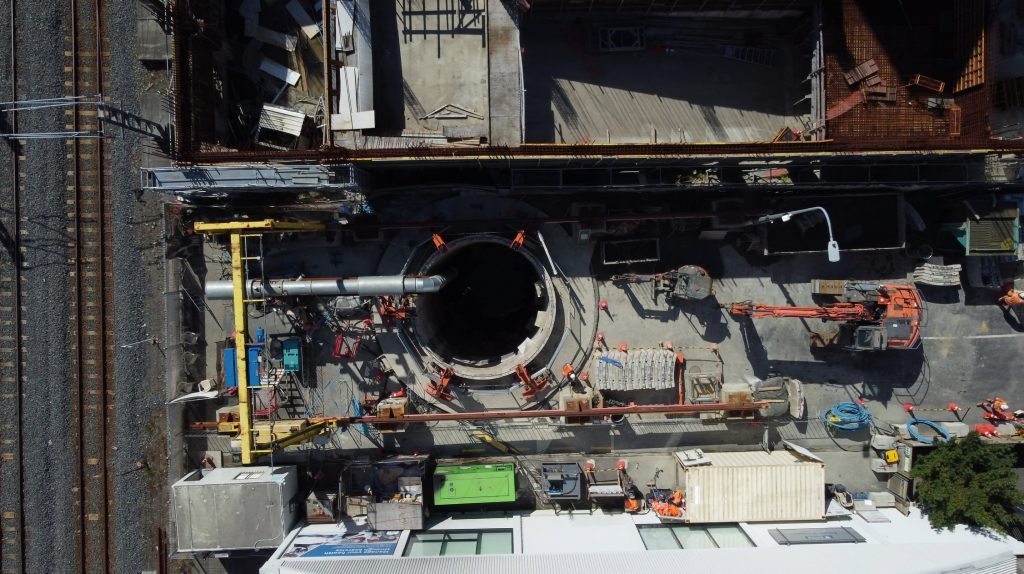
Given the constrained Newmarket location on Kingdon Street, deliveries were staged to suit the limited footprint and maintain construction progress.
Hynds supported the project with:
- Detailed 3D modelling and Revit-based design
- Tolerance control for segment manufacture and fit-up
- A dedicated Order Manager and on-site representative to coordinate production and delivery with construction progress

Embodied carbon reduction stacks up with Hynds LC® lower carbon segments
A Hynds LC® lower carbon concrete option was adopted, with early-stage calculations indicating a saving of 63.8 t CO₂eq, representing an approximate 33% reduction, with more savings due to be made as the project progresses.
A second shaft (MHS2), 6 m diameter and 11 m deep, is also underway. This shaft comprises of rings, each formed from 12 precast segments (132 segments total), with approximately 40 segment configurations, reflecting similar optimisation of design and manufacture.
The result is a constructable shaft suited to the long-term demands of Auckland’s stormwater network.